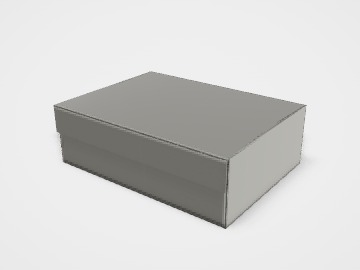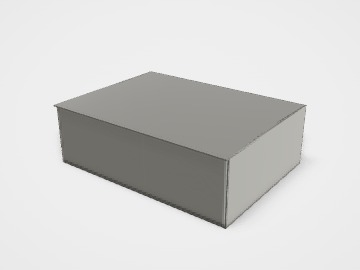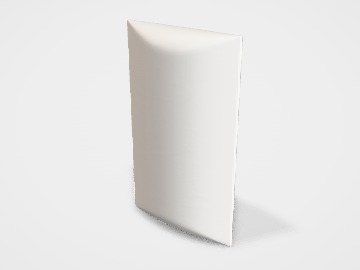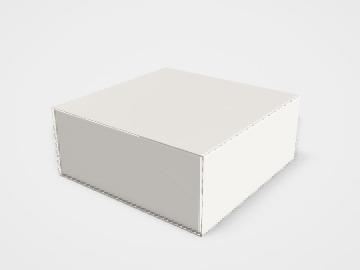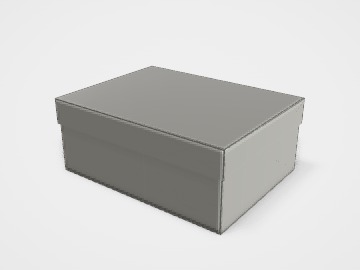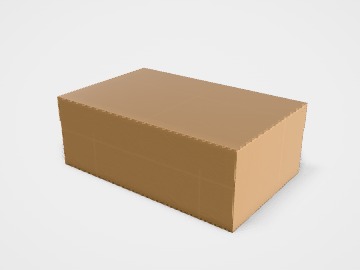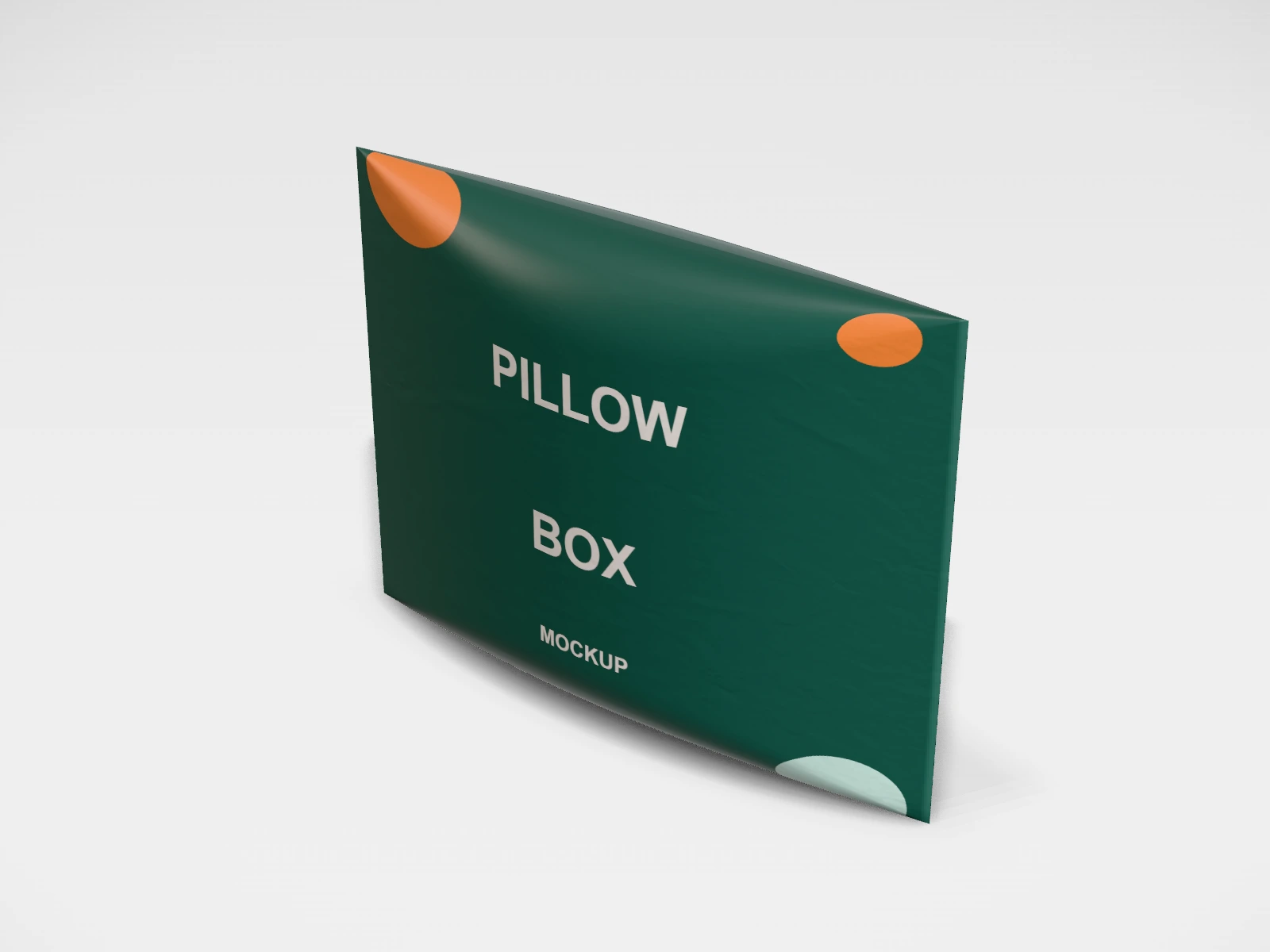
Kraft pillow box, wide mockup and print template
A pillow box at 160 x 120 x 40 mm in kraft paperboard. Change any size, put your artwork on it, see it in 3D and download a print-ready label. Free, in your browser, no account needed.
What you get
- Structure
- Pillow box
- Starting size
- Width 160 mm, Length 120 mm, Thickness 40 mm. Every size can be changed.
- Material
- Kraft paperboard
- Downloads
- PDF and SVG print template, PNG and JPG mockup images, turntable video, GLB 3D model
- Good for
- soap, gift card
- Accuracy
- An approximation of the industry structure: good for concepts and quotes. Have your printer check flaps, glue areas and allowances before production.
Parts of a pillow box
A pillow box is a single piece of board with curved creases at each end. The ends press inward along the curves to close, giving a soft, rounded shape like a pillow. It needs no glue at the ends, ships flat and folds in seconds. It suits small, light items: jewellery, gift cards, soaps, return gifts and favours. The shape is eye-catching on its own, so simple artwork often works best.
- Front and back faces
- The two curved faces that carry the artwork.
- Curved end flaps
- Arcs at each end that press in along the curved creases to close the box.
- Curved creases
- The arc-shaped fold lines. They need a good creasing rule to bend cleanly.
- Glue flap
- Joins the long edge, so the pillow arrives flat but already formed as a sleeve.
How to size it
- In the studio, the sizes are Width (across the face), Length (end to end) and Thickness (how much the pillow bulges).
- Lay the product flat and measure it. Add generous room on width and length, because the curved ends take up space.
- Set thickness to the product depth plus a few millimetres. The end flaps close neatly when their depth matches the thickness.
- Try the Size presets first, then adjust. Make a sample before ordering, as pillow boxes are less forgiving than square boxes.
Materials and finishes
- White paperboard, 250 to 350 gsm
- Full-colour print and clean curves. The most common choice.
- Kraft board
- Natural look for soap, favours and eco-leaning brands.
- Metallic or textured board
- Wedding and festive favours. Check with the printer that it creases without cracking.
Finishes
- Matte or gloss lamination
- Protects the print and helps the board bend without cracking at the curves.
- Foil stamping
- A small gold logo or a name on wedding favours.
Mistakes to avoid
- Packing something too thick or heavy. Pillow boxes are for small, light items; they open under load.
- Text near the curved creases. Artwork stretches slightly as the ends curl, so keep it on the flat middle of each face.
- Board that cracks at the curves. Heavy or very stiff board needs good creasing; lamination helps.
- Assuming the studio fold shows the exact curve. The 3D model is shaped rather than folded; the dieline has the real curved creases.
How to make it in the studio
- Open it. Press Customise this kraft pillow box, wide. It opens in the 3D studio at 160 x 120 x 40 mm.
- Set the size. In the Size panel, pick a preset or type your own measurements.
- Add your design. In the Design panel, upload your logo or artwork: it goes on the front first. Pick other faces to add colours, text or images to each.
- Check it in 3D. Turn the pack around. Switch to the flat print view to see the artwork on the label.
- Download. The Download panel gives you the print template first, then mockup images for your store or social posts.
- Get it made. If you want a quote, send the design to packitmama from the Download panel, and we will reply personally.
Questions
Can I add a window?
Not on this template. If you need a window, a tuck end box with the Window option is the closest choice.
Why is there no Inside and Outside size?
The pillow is a curved shape rather than a square box, so the studio sizes it by width, length and thickness instead.